

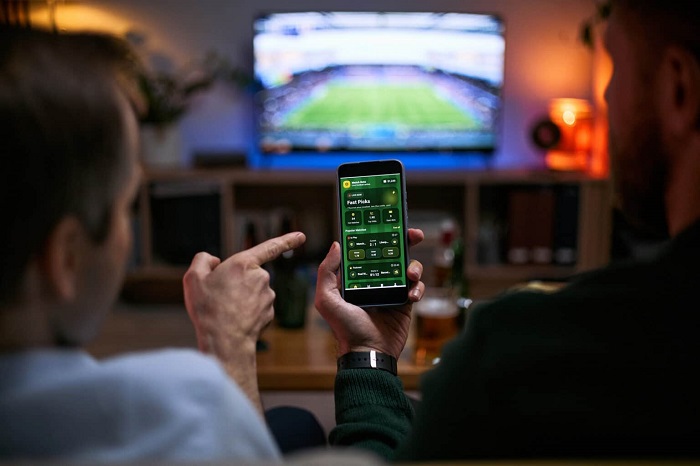
The modern sports betting app is engineered to feel like an all-inclusive command center. You deposit funds, open an active market, and launch a video player nestled directly above your betting slip. The marketing pitch is seamless convenience: track every snap, pitch, or possession in real time without ever switching windows or turning on the living room television. For fans of in-play wagering, that setup feels like the ultimate tactical advantage.
Unfortunately, that feeling of control is largely an illusion. When you rely on embedded video streams inside a sportsbook interface to make live betting decisions, you are almost certainly playing with outdated information. What looks like an organic sequence developing on your screen has already resolved on the field, and the gap between those two realities is where bankrolls quietly disappear.
The Invisible Latency Gap Between Video and Official Data
To understand why in-app video feeds are a hazard for live bettors, you have to separate video delivery from data delivery. They do not travel along the same highway, and they certainly do not move at the same speed.
Streaming high-definition video to millions of handheld devices requires substantial technical overhead. The live camera feed must be captured, compressed, chopped into digital segments, sent to content delivery networks, and reconstructed on your phone. Even under optimal conditions, this process introduces a glass-to-glass delay that routinely ranges from eight to twenty-five seconds. If your mobile connection encounters momentary packet loss or network congestion, the built-in video player quietly buffers, widening that lag even further without notifying you.
The sportsbooks, however, are not pricing their markets based on video broadcasts. They subscribe to ultra-low-latency official league data feeds powered by courtside scouts, optical tracking arrays, and radio-frequency chips sewn into uniforms and balls. That raw operational data moves across dedicated fiber networks in a few hundred milliseconds.
By the time you watch a basketball guard cross half-court on your screen, the sportsbook algorithms already know the possession ended in a turnover or a foul. The bookmaker is operating in the absolute present; you are placing wagers on the past.
How Embedded Stream Lag Triggers Costly Mistakes
Lag inside a dedicated entertainment stream is merely a nuisance that spoils a touchdown via a group text. Inside a betting interface, however, that same lag actively warps your decision-making and leads directly to costly errors.
The Illusion of the Phantom Advantage
The primary danger of watching the stream directly above the bet slip is the false sense of anticipation. You see a football offense line up in an empty backfield on third down, spot a glaring coverage mismatch on the boundary, and rush to take the over on the passing yardage prop before the market adjusts.
In reality, the play is already over. The algorithmic trading engine powering the sportsbook adjusted the line twenty seconds earlier, based on the instantaneous whistle from the official. The window of opportunity you thought you identified never actually existed for you. It existed only as a ghost frame on a delayed player.
The Rejection and Suspension Trap
Bettors who rely on in-app streams routinely face the frustration of the infinite loading icon. You tap a line at plus odds, submit the ticket, and watch a circular progress bar spin for three to five seconds before receiving a notification: Market Suspended or Line Changed.
Sportsbook platforms enforce a built-in transmission delay on incoming live wagers specifically to protect themselves against court-siding or latency arbitrage. If the trading engine detects a material play while your bet is pending, the system rejects the wager or forces an updated price.
The Hazard of Automated Odds Acceptance
To reduce the friction of rejected tickets, most apps offer a setting that automatically accepts odds movements. If you toggle this feature on while relying on a laggy stream, you expose yourself to severe negative price slippage.
You might attempt to lock in a point spread at +3.5 based on what looks like a goal-line stand in progress. By the time the software processes the request, the team has already conceded a touchdown. Because you opted into automated acceptance, the ticket goes through anyway, but at +9.5 or with severely reduced payouts. You are left holding an undesirable ticket on a game state you had no intention of backing.
Why Sportsbooks Cut Corners on Embedded Video
It is easy to assume that multi-billion-dollar gaming operators would prioritize the fastest video infrastructure available. The commercial reality is far more complicated.
Distributing ultra-low-latency video at scale using WebRTC protocols is exceptionally expensive. Sportsbook operators pay substantial licensing fees simply to acquire broadcast rights for international soccer leagues, tennis tournaments, and domestic sports. Pouring additional millions into specialized video delivery infrastructure for casual viewing offers little return on investment for the house.
The primary business goal of embedded streaming is user retention. Keeping your eyes inside the ecosystem prevents you from checking competitive odds on rival platforms or putting the phone away during commercial breaks. High fidelity and stability take precedence over absolute speed. As long as the video stream looks crisp and does not crash, the operator has accomplished its goal, even if the broadcast runs half a minute behind the physical action.
Smarter Habits for In-Play Wagering
Avoiding the latency trap does not mean you have to abandon in-play betting entirely, but it does require decoupling your visual entertainment from your trade execution.
First, treat all in-app video as casual theater rather than actionable intelligence. If you enjoy watching an obscure tennis match while tracking your positions, keep the stream on, but never fire a bet based on a split-second physical action you just witnessed on that miniature screen.
Second, audit your stream delay manually. Compare the clock on your video feed against the platform’s own live statistical graphic or an official league game tracker. The statistical scoreboard updates far quicker than the video frames. If you notice a five-point swing on the digital scoreboard before the shot leaves the shooter’s hand on your video player, you know precisely how far behind you are.
Third, disable auto-accept options on odds fluctuations. Force the platform to ask for your confirmation whenever a price changes. Taking the extra second to evaluate a revised number protects your balance from executing bad wagers during volatile game situations.
Finally, restrict your in-play activity to deliberate pauses in the action. Commercial timeouts, halftime intervals, and pitching changes provide a stable window where the game state freezes, allowing data feeds and video broadcasts to synchronize. Stepping away from hyperactive micro-betting and focusing on macro-level adjustments is the only reliable way to ensure you are not paying a premium for someone else’s millisecond advantage.