
Live poker thrives on psychological tension, observation, and imperfect information. Reading physical tells, deciphering betting patterns, and balancing ranges under pressure are hallmarks of high-level play. Yet every player who logs enough hours in a brick-and-mortar cardroom eventually runs into an opponent who operates outside the spirit of fair competition. These players are not slipping marked cards into the deck or colluding with accomplices through hidden signals. Instead, they operate inside the gray margins of room etiquette and administrative procedure. This underhanded practice is known as angleshooting.
An angleshoot occurs when a player deliberately uses deceptive, technically legal maneuvers to manipulate the action, extract illicit information, or avoid paying off a wager. For both beginners and seasoned regulars, falling victim to an angle is uniquely infuriating because it exploits trust and sportsmanship. To protect your bankroll and keep your focus intact, you must understand how angleshooters operate, recognize their favorite tricks before they unfold, and know exactly how to handle them when the dealer fails to step in.
The Anatomy of an Angleshooter
Unlike an outright cheat who breaks hard rules and risks immediate expulsion or criminal charges, an angleshooter relies entirely on plausible deniability. Their entire playbook depends on feigning ignorance, claiming innocent confusion, or blaming poor eyesight whenever someone calls them out. If the trick succeeds, they pocket chips they were never entitled to win. If the trick gets shut down, they shrug, apologize with a practiced smile, and accept a routine verbal reminder without penalty.
Angleshooters prey heavily on the social dynamics of the poker room. In most games, players extend each other basic courtesies, assuming everyone at the table is competing in good faith. An angleshooter weaponizes that courtesy, relying on the fact that most people hate causing a scene or arguing in public. They count on you feeling too embarrassed to halt the hand or demand a formal ruling. Recognizing that this behavior is calculated and predatory is the first step toward neutralizing it.
Common Live Poker Angles and How to Spot Them
While opportunistic players can invent angles on the fly, veteran dealers and floor staff see the exact same routines repeat themselves week after week. Recognizing these classic setups in real time ensures you never surrender equity to a manufactured misunderstanding.
The Ambiguous Motion and the False Pump
One of the oldest tricks in the live game involves manipulating chip movement to gauge an opponent’s reaction. Facing a tough river decision, an angleshooter gathers a substantial stack of chips, moves their hand forward across the betting boundary, pauses mid-air, and studies your face.
If they see your eyes widen with relief or watch you reach forward to muck your cards, they drop the chips onto the felt and claim a call or raise. If they see you sit up straight, check your hole cards with confidence, or grab chips to re-raise, they smoothly drag the stack backward, claiming they never released the chips and that no forward betting rule applies.
A common variation involves tossing chips into the pot without an explicit verbal declaration. If faced with a seventy-five-dollar bet, the angleshooter might toss in two one-hundred-dollar chips while casually mumbling under their breath. If you look deflated and start shaking your head, they insist the action was a raise to two hundred. If you snap-call or reach for a three-bet, they claim they were merely calling seventy-five and expect twenty-five dollars in change.
The Hidden Big Chip
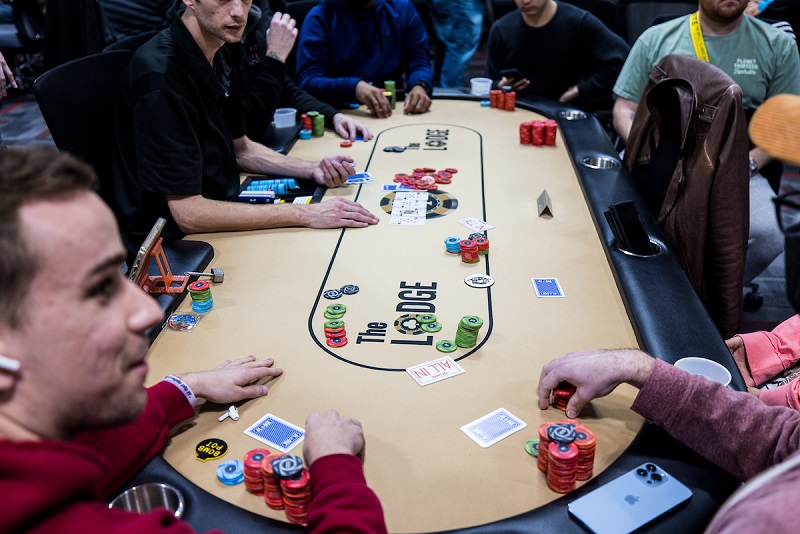
Stack architecture is governed by standard cardroom rules: large-denomination chips must always remain visible, either positioned at the front of a player’s stack or placed directly on top of smaller denominations. Angleshooters routinely disregard this rule by burying their largest chips behind towers of low-value chips or concealing them inside a cupped palm resting on the rail.
When you survey their stack to determine effective depth, you might calculate that they have only two hundred dollars behind, making an aggressive shove mathematically correct. Once you slide your chips into the middle, the shooter suddenly pulls two five-hundred-dollar chips out from behind their stack and makes the call. By obscuring their actual stack size, they trap opponents into catastrophic mathematical errors that would never occur if the board state were clear.
The Verbal Misdeclaration at Showdown
At showdown, cards are supposed to speak for themselves, but the chaotic seconds following the final river bet are ripe for verbal deception. A common angle occurs when a player with a mediocre or broken holding announces a powerhouse hand with absolute confidence before tabling anything.
On a board with three hearts, an angleshooter might announce “flush” in an authoritative tone while keeping their cards firmly cupped face-down. An unsuspecting player holding two pair hears the declaration, winces in disgust, and immediately tosses their winning hand forward into the muck pile. The moment those cards touch the muck, the hand is dead. The angleshooter then turns over a weak missed draw or an underpair and collects the pot because the rightful winner surrendered their cards.
The Calculated Out-of-Turn Action
Acting out of turn happens by accident all the time, particularly among distracted or tired players. However, habitual angleshooters deploy premature action as an intentional weapon on multi-way pots.
Seated behind you, an angleshooter might loudly announce “check” or toss their cards toward the muck before you have made your move. They do this to freeze your options. If they check out of turn, they are trying to discourage you from betting, hoping you check along so they can see a free river card. If they pretend to fold out of turn behind you, they want you to believe the field has narrowed, tempting you into an ill-advised bluff that they later snap off when the dealer restores proper turn order.
How to Bulletproof Your Game Against Dirty Tricks
Protecting yourself against angle tactics does not require getting hostile, shouting across the felt, or engaging in personal arguments. It requires mechanical discipline and an uncompromising adherence to procedure.
-
Never release your cards until the pot is physically pushed to you: The single most important habit in live poker is protecting your hand. Keep a physical card protector or a heavy chip on top of your cards at all times. At showdown, never surrender your hand based on an opponent’s spoken claim. Wait until their cards are flat on the felt, face-up, and verified by the dealer. If you believe you have a showdown-worthy hand, turn your cards face-up immediately and let the dealer read them.
-
Freeze and demand official clarity before committing action: If an opponent makes an ambiguous movement, mumbles an unclear statement, or slides forward an irregular combination of chips, do not act. Keep your hands off your chips and your cards. Look directly at the dealer and ask: “Is that a call or a raise?” or “What is the official action?” Force the dealer to make a definitive ruling on the record before you reveal a single ounce of your own intent.
-
Politely police stack visibility from the start: If someone at your table obscures their large chips, address it right away. You do not need to accuse them of bad faith; simply address the dealer: “Dealer, could we have the black chips brought to the front, please?” House rules mandate stack transparency, and a competent dealer will instruct the player to comply immediately.
-
Call the floor without apology or hesitation: Angleshooters thrive when their victims stay quiet to avoid an awkward confrontation. If an opponent attempts an ambiguous play, asks for a do-over, or disputes a clear procedure, ask the dealer to stop the action and call the floor supervisor over. State the sequence of events calmly, keep your cards capped, and let cardroom management make the final call.
Preserving the Integrity of the Table
Poker is an uncompromising intellectual battle, but the game functions only because everyone agrees to a foundational set of mechanical boundaries. When angleshooters go unchecked, game flow deteriorates, recreational players leave in frustration, and the entire table dynamic turns hostile. By locking down your personal mechanics, refusing to act on ambiguous signals, and holding deceptive opponents to the letter of the rulebook, you safeguard your own chips while keeping the game fair for everyone at the table.