

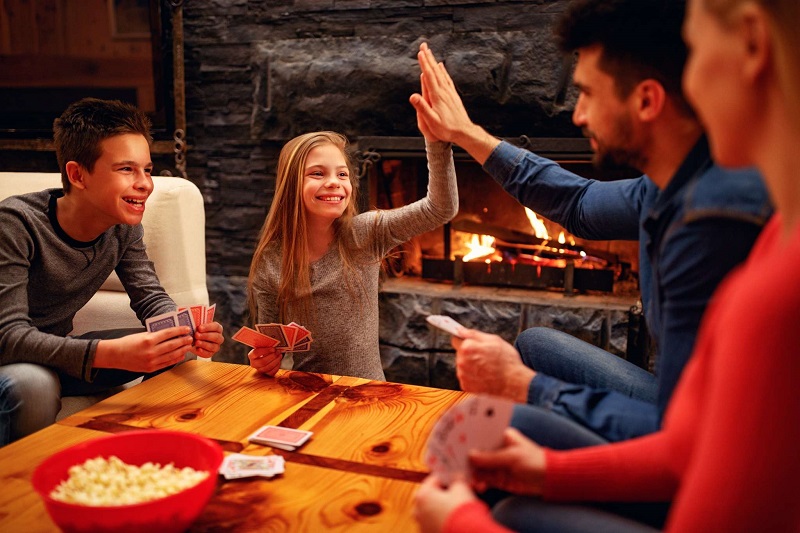
Gathering three or four generations under one roof is always an act of love, but keeping everyone engaged after the meal is cleared can test anyone’s patience. The living room often fractures into predictable silos: grandparents reminiscing on the sofa, parents cleaning up or talking logistics, teenagers vanishing behind illuminated screens, and younger children bouncing off the furniture. Bridging those divides rarely happens through forced small talk. It happens when everyone has a common focal point, a shared objective, and just enough playful tension to forget the age differences in the room.
Few pastimes achieve that balance as effortlessly as social card games. A deck of cards does not carry the intimidating learning curve of a heavy board game, nor does it demand the solitary concentration of digital entertainment. It is tactile, portable, and inherently conversational. When handled thoughtfully, an evening of casual card playing can turn an ordinary family gathering into an enduring tradition where grandparents, parents, and kids laugh on entirely equal footing.
Curating the Table: Games That Span Decades
The biggest hurdle in planning an intergenerational game session lies in title selection. Pick something too childish, and older teens and adults quickly check out. Pick something dense with complex rulebooks and forty-minute setup times, and younger children or older relatives will politely decline.
The sweet spot lies in games that are easy to explain in under two minutes but carry enough emergent strategy to keep analytical minds invested.
Traditional card games remain perennial favorites for good reason. Classics like Rummy, Cribbage, Euchre, and Hearts have survived for generations because their core mechanics rely on pattern recognition and probability rather than rapid reflexes. Grandparents often already know the rules, which shifts the family dynamic: the oldest players become the mentors rather than bystanders trying to decipher modern gadgets.
At the same time, the renaissance of modern card games offers fantastic alternatives that level the playing field because no one has a decades-long head start. Light card-drafting games, trick-taking titles with clever twists, and deductive card games work brilliantly. Games where cards feature clear iconography, shared goals, or humorous surprises keep the energy buoyant and prevent anyone from feeling out of their depth.
Leveling the Playing Field Without Dumbing Things Down
Generational play requires careful calibration between skill and luck. If a game relies purely on intellectual dominance or memorization, the experienced adult will win every hand, which saps the enthusiasm of younger participants. If a game is pure chaos with zero agency, older players quickly lose interest.
Balancing Strategy and Serendipity
The ideal social card game incorporates a healthy dose of serendipity. When a lucky draw can occasionally upend a masterfully planned turn, younger players experience genuine triumphs without adults needing to conspicuously throw the match. Children can spot patronizing play from a mile away, and nothing deflates their excitement faster than realizing an older sibling or parent let them win on purpose.
Games with hidden information, bluffing elements, or communal card pools allow players to make smart decisions while still leaving room for unexpected twists of fate. That unpredictability keeps the stakes low and the laughter high.
Managing Pace and Eliminating Pressure
Speed-dependent card games can create unintended friction. Games that require lightning-fast physical slapping or split-second verbal reactions tend to favor teenage reaction times while frustrating grandparents whose arthritis or reflexes might slow them down. They can also overwhelm younger kids who are still processing their cards.
Turn-based structures, where each player has a comfortable moment to consider their options without an active timer ticking away, preserve dignity and reduce stress. If someone takes an extra beat to survey their hand, the table should naturally fill that space with conversation, banter, or teasing, rather than impatience.
Tactile Accommodations That Keep Everyone Comfortable
Good hospitality extends to physical comfort, and card games present specific mechanical challenges that are easy to overlook if you have nimble twenty-something fingers.
Young children frequently struggle to fan out more than five cards without dropping them face-up on the rug. Older adults may deal with reduced grip strength, joint stiffness, or diminishing eyesight. Addressing these realities proactively keeps everyone included without drawing uncomfortable attention to anyone’s limitations.
Simple adjustments can make a world of difference:
-
Use card holders: Inexpensive curved wooden or plastic card racks allow small hands and tired wrists to display an entire hand clearly on the table without constant gripping.
-
Opt for large-index or high-contrast decks: If you are playing traditional card games, picking up a deck with oversized numbers and distinct suit colors spares older players from squinting under dim dining room lighting.
-
Check the seating and lighting: Ensure the playing area is well-lit and that chairs offer proper back support. Cramming six people onto low stools around a coffee table might work for college students, but it quickly cuts an evening short for anyone over fifty.
The Chemistry of Intergenerational Teams
One of the most effective ways to neutralize skill gaps and build emotional bonds is to play in partnerships, specifically pairing different generations together.
Teaming a teenager with a grandparent creates an immediate alliance that bypasses everyday family friction. The teen brings sharp observation and enthusiasm, while the grandparent contributes patience, long-range foresight, and decades of card-playing instincts. They learn each other’s nonverbal cues, celebrate shared victories, and share the blame when a risky gamble backfires.
Partnership games also remove the pressure of public failure. When a younger child plays alongside a parent or aunt, they can discuss decisions together in a low-stakes huddle. The child learns strategic thinking through gentle guidance rather than post-game critique, turning every deal into an organic learning experience.
Turning a Casual Round into an Enduring Ritual
The goal of an intergenerational game night is never the score sheet; it is the atmosphere around it. The moment winning becomes more important than the company, the magic evaporates.
Keep sessions modular. Choose games where individual rounds resolve in ten to fifteen minutes. This built-in cadence gives players natural exit ramps to grab snacks, stretch, check on dinner, or rotate in and out of the game without breaking the flow. It respects shorter childhood attention spans and lets older relatives step back to spectate whenever fatigue sets in.
Establish lighthearted traditions around the table. Silly house rules, a ridiculous traveling trophy for the winner, or dedicated game-night snacks help transform an ordinary pack of fifty-two cards into an anticipated family event.
A Legacy Built One Hand at a Time
Long after the rules of a specific card game fade from memory, the feeling of the room lingers. Children remember the sound of their grandmother’s unmistakable chuckle when she laid down a winning combination. Grandparents cherish watching their reserved teenage grandchildren come alive with spirited table talk and triumphant grins.
In a culture increasingly fragmented by personalized feeds and generational bubbles, gathering around a simple deck of cards remains one of the few places where we still look directly into each other’s eyes, read each other’s smiles, and share unfiltered joy. All it takes is the right deck, a comfortable table, and an open invitation.